Author: gary

18 An American Icon Talks HR

An American Icon Talks HR

By Jathan Janove, J.D. September 1, 2020

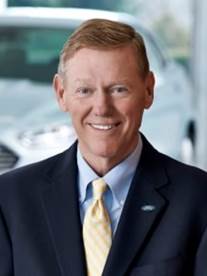
Alan Mulally is one of the most acclaimed executives in the United States. He led Boeing’s commercial aviation business to success after the attacks of Sept. 11, 2001, which had devastated the airline industry. Subsequently, Henry Ford’s great-grandson hired him to rescue Ford Motor Co. from financial disaster. Mulally brought Ford from the brink of ruin to a leading position in the automotive industry. Ford’s stock went from a low of $1 per share to more than $18 per share during his service, a 1,700 percent improvement. At a unionized company, his employee approval rating was over 90 percent. You can learn more of his story in the best-selling book, American Icon: Alan Mulally and the Fight to Save Ford Motor Company(Currency, 2013).

Now retired as the CEO of Ford and serving on the boards of Alphabet, Google, Mayo Clinic and Carbon3D, Mulally reflects on lessons learned about working together and the importance of the HR profession.

Working Together, Continuous Improvement and HR

Mulally has nurtured what he calls "our working together management system." It’s a value creation road map for including stakeholders in the business. People work together as a lean, global enterprise, pursuing a compelling vision with a comprehensive strategy and a relentless implementation plan. This includes making a commitment to a culture that supports "a smart, healthy and high-performance organization based on humility, love, service and deep respect for all participants and stakeholders, where we help each other individually and as a team while continuing to grow and improve."

Continuous improvement isn’t just for products and services, Mulally said. "It is also for all the people involved. And no group is more important and can make more of a difference in this continuous improvement than HR."

HR as a Process Owner and Leader

Most corporate leaders undervalue the HR profession. "All too often, HR is not part of the leadership team," said Mulally, who believes this is a huge lost opportunity for the entire organization. "HR can and should be part of the leadership team and the process owner for everything associated with the employees, including recruitment, performance management and continuous leadership development. When the leadership team decides on organization goals, objectives and initiatives, including what will be measured and when, HR’s job is to hold all the elements of the company accountable for ensuring that they deeply understand and keep their commitments.

"It is critical that HR be part of the leadership team and lead and nurture the people processes that the entire leadership team follows."

I shared with Mulally my experience when I asked a senior HR professional to explain the manufacturing process at her company. Although she’d been there for 12 years, her response was, "I have no idea. I’m in HR."

"At any of our companies," Mulally said, "that would never happen."

At the companies he led, Mulally established weekly three-hour business process review (BPR) meetings. At these meetings, the person in charge of each department, group or unit presented his or her team’s goals and candidly shared the team’s progress against the plan to support the organization’s objectives. The other leaders then offered support, input, suggestions and help.

"HR was a full, active member of our leadership team and our BPRs, which were critical to our success. Our HR leader knew everything about the business, whether it had to do with product development, finance, IT [information technology], manufacturing or anything else of importance." Mulally said this knowledge enabled HR to effectively contribute its expertise and service to the organization and its vision, strategy and plan.

From Shareholder to Stakeholder

For most of his career, Mulally was a member of the Business Roundtable, an organization made up of CEOs from the biggest companies in the U.S. Mulally encouraged the organization to expand the organization’s mission statement, which centered on maximizing shareholder value to include and create value for all of the stakeholders.

Last year, the Business Roundtable made the shift from shareholder to stakeholder. This means CEOs are not only charged with making money for owners, but they also must add value for all of the stakeholders, which include customers, employees, suppliers, the broader community and the environment.

Mulally believes this dramatic shift in CEO responsibility creates a significant opportunity for HR. A broader focus on stakeholders rather than on shareholders reinforces the need for and importance of HR in making sure objectives, needs and values are being served for and by all.

Coaching

Mulally is a huge proponent of personal development coaching, having been coached himself by Marshall Goldsmith. "If you work in HR for a company that supports coaching, you have a great job and opportunity to continuously improve the performance of the individuals and the team. In addition to your own coaching work, you get to vet and deploy coaches throughout the organization to serve."

Mulally added that "HR oversees the employees’ 360-degree assessment, performance management, and employee growth and development as the people process owner, coach and facilitator. This is important, exciting and fun!"

Humility

I told Mulally about a retired CHRO friend of mine who began his career in operations. On his first day at work, my friend was shown around by his new boss, the vice president of operations. "As he took me down the hall, we passed an office that said ‘personnel department,’ " my friend explained. "My boss said, ‘Don’t go in there unless you want to feel small and stupid.’ "

Mulally’s reaction? "Not in our companies!" Mulally believes humility is essential for all leaders. "It’s never about you; it’s about us and our company vision, strategy and plan to serve all the stakeholders and the greater good."

In American Icon, author Bryce Hoffman points out that most of the decisions that saved Ford were made as a group working together.

"I believe strongly in humility, love and service. No matter what the occasion or circumstance, we can remain humble and respect others’ dignity. This will enable everyone to bring their best selves to work together to accomplish the organization’s objectives."

Humble leaders see their job as serving others. According to Mulally, "that’s exactly what good HR does."

Progressive Discipline

Mulally believes there is a tremendous opportunity to improve HR-administered progressive discipline. (In this column, you can read my thoughts on this topic.) He recommends replacing write-ups, warnings and punishment with timely and respectful conversations. If things aren’t working out with an employee, see if there are development actions that might address the problem, and get a commitment to the agreed culture, operational process and expected behaviors. If not, it’s better for everyone that the person moves on.

Mulally shared a tale of two leaders: "One leader was absolutely brilliant in his functional discipline. However, he treated others with condescension and abrasiveness. At our BPR meetings, his behavior chilled discussion and inhibited working together. People felt intimidated and wouldn’t speak up.

"I pointed out to him that this kind of behavior ran contrary to our clearly articulated culture and its values and expected behaviors that we had committed to in order to create a smart, safe, healthy and high-performing team.

"He said, ‘But that’s just the way I am. I don’t think I can change.’

"I said, ‘That’s OK.’

"He smiled and said, ‘So does this mean that because I’m so good at what I do, I can continue to behave this way?’

" ‘Not exactly,’ I said. ‘It’s OK if that’s how you want to be. But you are also choosing to move on for the good of our entire leadership team, including all of our stakeholders.’

"He chose to leave Ford.

"On the other hand, we had a leader who likewise was brilliant and had some behaviors not supportive of our working-together expected behaviors. I had a similar conversation with her about our commitments to working together.

"Her response was, ‘This is how I was taught and what I’ve been around, and I’ve been very successful. However, I do understand why our working-together behaviors are important and needed, and I’m open to learning these new ways of working together and communicating with others.’

"We got her an executive coach and did a 360-degree [assessment]. She focused on three behaviors to change. She became one of the most trusted, valued and appreciated executives we had."

Working Together Works

According to Mulally, working together using stakeholder-centered leadership and coaching creates exciting, smart, safe and healthy organizations delivering value for all the stakeholders and the greater good. "And it creates a great career opportunity for HR to serve."

Thanks to Jathan Janove, speaker extraordinaire. His website is www.jathanjanove.com

I’ve survived 6 recessions without laying anyone off and you can too

My thanks to Pat Welch, CEO and co-founder of Boly:Welch for this blog.

After nearly 50 years in this industry, here’s my advice on how to navigate a recession:

  1. Don’t lead with fear.
    Keep a positive mindset. Recessions happen — but they always end eventually. In my experience, they’re an opportunity to lean into your values, and to build real relationships with your clients and community — not just transactional ones.

    2. Get clear on your core values.
    When times get tough, seize the opportunity to clarify and recommit to what matters most. The businesses that prioritize doing the right thing and leading from their values tend to be the last ones standing when the recession ends — and trust me, it will eventually end.

    3. Be nimble.
    Continue creating new value for your clients and stay relevant in the current moment. Don’t rely too heavily on any one client or type of business. And don’t make long-term decisions based on short-term circumstances.

    4. Continue to invest.
    You need to stay visible and connected. Double-down on marketing and relationship-building. And continue to invest in your employees — emotionally and financially. They’re looking to you for reassurance. [Gary’s addition: When I joined Burroughs Corporation in the mid-70s, I noticed a really sharp group of mid-level managers. During a recession in the 1960s, Burroughs heavily recruited at top universities while most other companies were cutting back on hiring. Those mid-level managers were responsible for much of the company’s success in the 1970s].

    I’ve survived 6 recessions so far, through creativity, adaptability, and honoring what’s at the foundation of our business: relationships. We don’t know what’s coming, but we’ll face whatever comes by nurturing relationships, adapting, creating new value for our clients, and staying visible and connected in our community.

Pat Welch, CEO & Co-Founder of Boly:Welch

#16 Just Be With Me

My friend Mary will probably die within a week. At 96, she’s lived a rich, full life. When I visited her yesterday morning, I asked if she would like me read scripture, or sing to her, or whatever. Barely audible, she answered, “Just be with me.” We were reminiscing and I mentioned Judy, who had been a very close friend until a falling out several years ago. I asked Mary if she would like me to call Judy. “Please.” Judy was surprised to hear that Mary wanted to see her again. Since Judy no longer drives, I volunteered to give her a ride. She explained that Mary had gotten angry with her, shouting, “I never want to see you again!” when Judy sold her house and moved to a retirement complex in the next town. Judy was a little apprehensive as she walked into Mary’s house, but when Mary saw her, she smiled and welcomed her. They reminisced for more than 30 minutes, with Judy kissing Mary on her forehead when she left.

When all is said and done, it’s person-to-person connection that matters. “Just be with me.” That is as true in the workplace as it is in a hospice room. What each person in a workplace wants is to be valued as a person. Not for what they can do, but because they are infinitely valuable as a unique human being. It’s that simple.

(Although I am taking August off from officially blogging, this blog insisted on being posted now.)

Gary

#14 Trust

If levels of trust were a stock market indicator, we would say we are in a very bearish market. A March 2021 Gallup Panel survey found that only 23% of U.S. employees strongly agree that they trust the leadership of their organization.

This affects us all. When people lose trust in leaders, their decisions are informed by suspicion and their actions by self-interest. Businesses become more vulnerable as fewer employees are motivated to act for the greater good. As Warren Buffet said, "Trust is like the air we breathe — when it’s present, nobody really notices; when it’s absent, everybody notices." Indeed, Gallup finds that low-performing teams in low-trust cultures talk about trust constantly. In high-trust cultures, teams rarely mention trust at all.

And when employees lose trust in leadership, why should they stay?

In his book, The Five Dysfunctions of a Team, Patrick Lencioni identifies the absence of trust as the number one trap that causes teams to be ineffective. He further suggests that while the absence of trust can cause teams to be ineffective, the converse is also true, because trust is the foundation on which healthy relationships are formed. With trust, it is possible to build an environment where people experience psychological safety and can display vulnerability without fear of repercussion. It is also possible for individual team members to enter into productive conflict with other team members, while maintaining a comfort level for committing themselves to tasks and to holding each other accountable. This is because they trust that team members will speak up and not just try to show them out or throw them under the bus when things go wrong.

Gallup suggests seven leadership practices to build trust:

  • The ability to build relationships that establish connections that transmit ideas and accomplish work
  • A drive for development that focuses on followers’ needs, expectations and aspirations
  • Comfort with leading change in organizational strategy and in alignment with the vision
  • The capacity to inspire others by encouraging their efforts and celebrating success
  • Critical thinking that seeks information openly, invites dissent and stimulates debate where needed
  • Communication skills that result in clear, open and transparent dialog that empowers trust
  • A need for accountability to hold yourself and others responsible for performance

This blog is based on: https://www.gallup.com/workplace/393401/trust-decline-rebuild.aspx, June 14, 2022.

Gary

#13 Unplug!

Are you as addicted to being connected as I am? I’ve always got my phone with me, and I check messages and e-mails frequently. On a recent vacation in Hawaii, I took my laptop and checked e-mails and messages daily. “So that I don’t have a mountain waiting for me when

I get back” is what I told myself. I was wrong. I never REALLY went on vacation; I just moved my office to Hawaii for a week. It usually takes me 2-3 days of vacation to let go, to actually be on vacation. In Hawaii, by the time I was really on vacation, it was time to return home. (The picture is at one of the trees on Kauai that was featured in Jurassic Park.)

Next vacation, I’m leaving the laptop at home and using my phone only as a phone – for calls with family.

Can this work for weekends as well? One way to attract and retain the best and brightest is to give them their weekends off – to let them be completely away from work. This has two major benefits:

  1. They return much more refreshed and creative, and
  2. While they’re away from their jobs, their creative juices can come up with non-conventional ideas – the ones that have the possibility of dramatically moving your organization forward. Because people get more creative when they’re outside of the physical office, strategic planning retreats must be held at an outside location.

But wait! There’s more! You can even do this at lunch! I was consulting to the US plant of a German medical manufacturer. While I was visiting the German headquarters, I noticed that when we would leave for lunch, as soon as we got to the front door, conversation switched from work to “How about the football (soccer) club?” and continued in that vein all through lunch. “How was the skiing last weekend?” When we passed through the front door as we returned from lunch, we became laser focused on work Again. When I asked the partner of the German consulting firm why, he replied, “Because we get higher productivity and we keep our workers happy.” The look on his face was almost incredulous, as if we Americans didn’t understand anything about people.

If you’re agreeing with my idea, what will you do to implement it? How will you let your people know (and have them let THEIR people know) that you want them to leave their work at the company’s doors? How will you lead by example?

Gary

Where Did All the Workers Go?

There are not enough traditional workers to fill the needs of employers any more. McKinsey research shows that only 35% of people who quit their jobs in the last two years remained in the same industry! 48% moved to a different industry, and 17% did not return to the workforce. So where can you find workers? There are 5 different types of workers, but employers are still mostly focusing on one type, the traditionalists. Traditionalists are career-oriented and are willing to make trade-offs in work-life balance in return for competitive compensation and perks, good job titles, and career advancement. They are easier to find through common recruiting strategies. But there aren’t enough traditionalists to fill the demand for employees. Where are the rest, and how can you reach them?

  1. Relaxers. This is the largest segment of the latent workforce. This group is a mix of retirees, those not looking for work, and those who might return to work under the right circumstances. Many have retired from their traditional careers and might not need money to live comfortably. So their value proposition includes the promise of meaningful work. Only 20% of these people are currently looking to return to the workforce, so employers need to get creative about finding them and luring them back. Thinking completely outside the box: How could you attract and retain volunteers? Of course, you’ll actually pay your workforce, but this will tell you how to attract the retain relaxers as well as your existing talent. Another way to ask this question is this: if a key department won the lottery tomorrow, how many would continue to work for you? And why? That’s your answer to retaining your current talent and finding relaxers.
  2. Do-it-yourselfers. They want workplace flexibility, meaningful work and compensation. They tend to be 25-45 years old, and include self-employed, gig and part-time workers. Ways of attracting them include defining meaningful tasks that can be accomplished independently, and/or managing outcomes rather than activities. Work location (e.g. work from home) might be a primary motivator.
  3. Caregivers and others who are at home. They are predominantly between 18 and 44. While they are motivated by compensation, they also look for flexible schedules, support for employee health and well-being, and career development. They could be lured by part-time options, four-day workweeks, flexible hours, and/or expanded benefits packages
  4. Idealists. They tend to be 18-24, and many are students or part-time workers. They are looking for career development, meaningful work, and a community of reliable and supportive people. Many could be attracted by tuition subsidies coupled with flexible work schedules that can accommodate classes.

Let me know how these ideas work for you.

Gary

https://www.mckinsey.com/business-functions/people-and-organizational-performance/our-insights/the-great-attrition-is-making-hiring-harder-are-you-searching-the-right-talent-pools?cid=other-eml-alt-mip-mck&hdpid=20c093ac-f017-403f-927c-b37a88ec82e1&hctky=2723063&hlkid=e952856783de4ce4b5e48806f67784f5

#11 Employee-Friendly Schedules

Some employees do not have predictable schedules, which prevents them from planning their personal lives. After we moved to Oregon, my wife enjoyed working retail at a women’s clothing store for several years. Unfortunately, the store refused to schedule employees

more than a week out. Her shift varied from one day to the next. Some days she would open the store; others she would close; still others she would work a mid-day shift. Because of this unpredictability, we were unable to schedule social time with friends more than a week out, and she was unable to take leadership roles in any of her civic organizations. I tried suggesting to the store manager that they could create a basic schedule for 4-5 weeks out, and pay people a little extra if they needed to call them in at unscheduled times. My suggestion was politely ignored. The lack of control over her schedule finally caused her to quit.

Another company, which operates around the clock, intentionally schedules its people for a different shift every two weeks – days, then evenings, then nights. They told me that this ensures that people are treated equally. On the plus side, this does provide schedule predictability. But my experience with circadian rhythms, based on travel to Europe and Australia, is that changing shifts every two weeks really messes up a person’s body clock, causing lack of productivity and increased errors. I had flown overnight from Massachusetts to Germany and was riding to our client site the next morning (German time – my body still thought it was the middle of the night in the US!). One of the German consultants pulled a Euro bill out of his wallet and asked in perfect English, “Gary, what do they call this in the US?” “Money,” I replied, somewhat confused. My mind was not able to grasp any nuances. The consultant laughed. Turns out they were looking for a specific word, like “bill”.

How much easier would it be for companies to retain and attract top talent if they included their employees’ social and physical well-being as they planned their schedules?

Gary

Ride of Paul Revere

“Listen my children, and you shall hear, of the midnight ride of Paul Revere…”

Today we celebrate the signing of the Declaration of Independence, July 4, 1776. However, the shooting revolution started 15 months earlier, April 19, 1775, with the battle of Lexington and Concord, as commemorated by Longfellow’s poem. On that day, 700-800 British army regulars marched 18 miles from Boston to Concord to seize military supplies being stored there. They left their barracks before sunup. Paul Revere was among several riders who fanned out to the surrounding towns warning that the redcoats were coming.

77 colonial militia were standing on the town green at Lexington. Historians do not know who fired the first shot; it wouldn’t have been the redcoats, and it wasn’t the colonial militia. In response, the redcoats fired a volley at the militia, killing eight and wounding nine. The militia did not return fire. Simultaneously, at first light, hundreds of minutemen from many surrounding towns started marching toward Concord, halting on the far side Old North Bridge across the Concord River on the west side of town.

When the redcoats arrived in Concord, they fanned out into the surrounding area, searching for supplies (which had been hidden) for four hours. In Concord, they found some wooden cannon carriages, which they put into the center of a street and lit on fire. The minutemen thought the redcoats were trying to burn the town down, so they opened fire – the first time that colonials had fired upon the British army. At Old North Bridge, two redcoats were mortally wounded, as were several minutemen. The ranks of the minutemen continually swelled with new arrivals, finally reaching about 3500. They harassed the redcoats all the way back to Boston, killing or wounding roughly 250, compared to 90 minutemen casualties.

On a sweltering summer day in Philadelphia 15 months later, the colonists signed the Declaration of Independence, making official the revolution that started on Patriot’s Day, April 19, 1775.

For more details, you can check out:

https://www.history.com/topics/american-revolution/battles-of-lexington-and-concord

https://www.battlefields.org/learn/articles/lexington-and-concord-shot-heard-round-world

The picture is of yours truly. I was captain of the Stow Minutemen for five years. Every Patriot’s Day, we marched 10 miles to Old North Bridge, starting at 5:30 a.m. The musket is a replica Charleville .69 caliber. Absolutely authentic, down to the steel; it would rust if it saw a cloud a mile away.

Interesting historical side note – the Boston Marathon was created on April 19, 1875 by a handful of young men who thought that Patriot’s Day should be remembered. They wanted to run from Concord to Boston, but were prevented by construction of a rail line, so they started in Ashland instead.

As you celebrate our freedoms today, please remember what they cost.

Gary

9 People Are Not Machines (and that’s good!)

I had a really good blog all ready to send today. Then I tested positive for COVID yesterday, and my carefully scheduled life got completely unscheduled.

We count on machines to always be ready, always available, and they usually are, as long as we maintain them properly. Given the huge strides by the quality movement in the last 50 years, that is a good assumption.

But people are not machines. Even when somebody arrives at work with a smiling face, they might be going through turmoil underneath the surface – a little like a duck that looks like it’s sitting serenely in a stream. At least the top part of the duck looks serene. The legs and feet, however, are paddling like crazy to keep the duck “motionless” with reference to the streambank.

We can and do schedule predictable interruptions in people’s availability – vacations, holidays, summer camp for our military reserves, weddings, etc. But we can’t schedule random interruptions – sickness, accident, a death in the family, a family crisis. It’s how we treat people during those unplanned events that characterizes the health of an organization. As an active member in my local Chamber of Commerce for the last 5 years, I met with the CEO Friday for lunch. I’m privileged to have her as a friend above and beyond our Chamber relationship. I called her this morning to let her know I might have exposed her to COVID. She had 2 responses: 1) I’m so sorry to hear that, and 2) I’ll bring over some homemade chicken soup tomorrow. (She’s a WONDERFUL cook!) It’s actions like this that build strong community.

Machines don’t create community – people do. Machines don’t have ideas for improving operations – people do. So as “unreliable” as people are, they’re the essence of any organization. Not just the people on your payroll, but your larger communities as well – your customers, your suppliers, and the city where you’re located.

Finally, please get your shots. I have had both original shots and been boosted twice (the second time the 6 days before I tested positive). The shots probably won’t prevent you from catching Omicron or its variants; they will, however, prevent COVID from putting you in the hospital or the morgue. And that’s worth it for your loved ones’ sake.

Stay well,

Gary